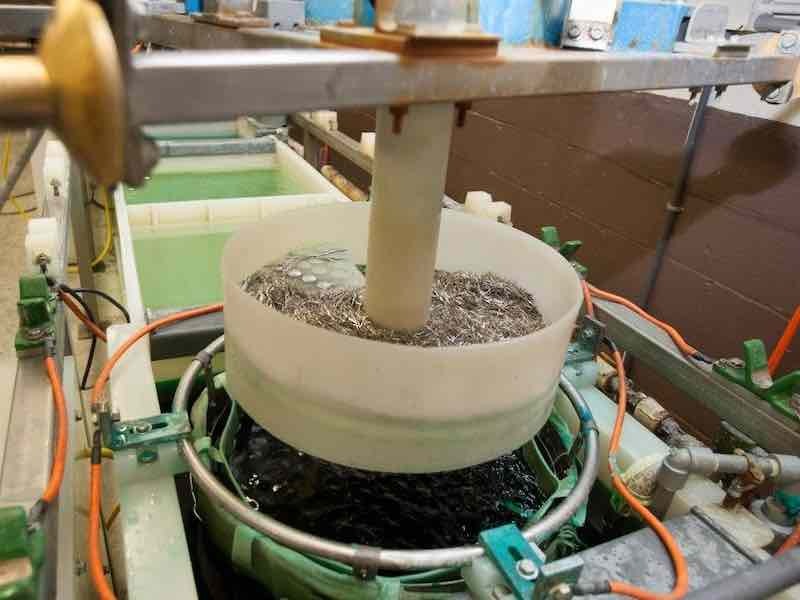


Chromic acid is the major ingredient for hard chrome baths. It’s also the most expensive component and is used at high concentrations, typically between 30-35 ounces per gallon (225-263 g/l).
 Eric Svenson Sr.Until recent years, the only form of chrome available for electroplating was chromium hydroxide (dry chromic acid), supplied in solid form and packaged in drums. The availability of liquid chromic acid is a relatively new development, produced by simply dissolving the dry material in water, often done directly in the shipping container.
Types of Chrome Chemicals
The dry form of chromic acid is more accurately named chromium hydroxide (CrO3). Technically, it doesn’t become an acid until it’s dissolved in water through the reaction H2O + CrO3 = H2CrO4, which forms chromic acid. This strong, oxidizing, acidic solution is used, along with minor concentrations of catalysts (sometimes with buffers and chelators), to electroplate hard chrome.
The source of chrome we use for plating is currently available in two forms: dry chromium hydroxide and liquid chromic acid at various concentrations. The dry material is typically packaged in sealed steel 50-kg drums (110.23 pounds) while the liquid version comes in 55-gallon drums and 275-gallon totes.
Handling Concerns
There are concerns with either of these chemicals, as both are considered hazardous materials. Chromium trioxide (the dry material) is hygroscopic, meaning it easily absorbs moisture from the air (like a sponge soaking up water), which can cause it to become damp, lumpy, or, in extreme cases, even dissolve into a viscous liquid. For this reason, the dry material should always be stored in sealed containers to prevent exposure to the atmosphere. This is especially important in hot-humid environments and with partially used containers. The 50-kg drums come with a rubberized gasket in the lid for this very purpose.
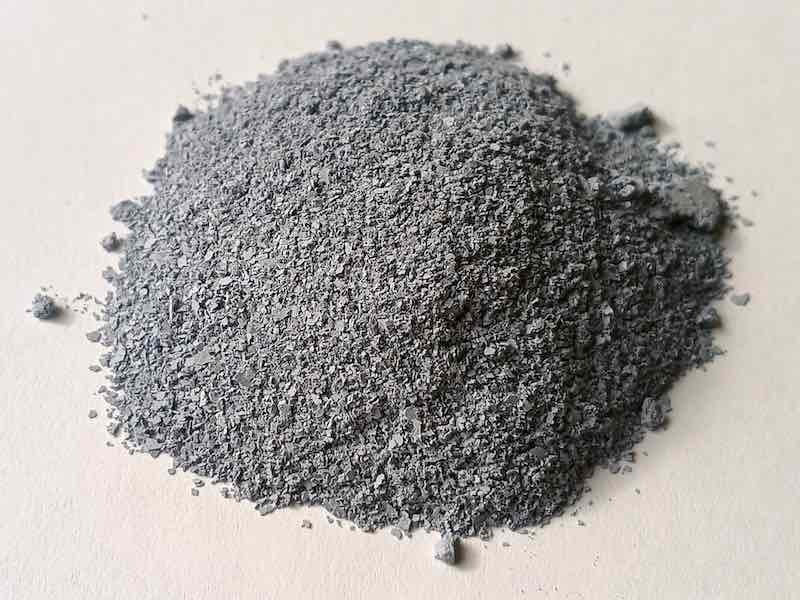
Chromium hydroxide (the solid form) was provided in the shape of large flakes. These tended to absorb moisture easily, form lumps, and pour poorly, often causing splashes when added to the chrome bath. It was also dusty, posing a breathing hazard to employees. The newer form is a beaded material consisting of small, round pellets. These are not dusty, don’t tend to form clumps, and actually pour much like a liquid would. The newer beaded chromium hydroxide is both easier and safer to handle.
Pros and Cons of Dry Chrome
Using the dry form provides significant benefits when making up a fresh bath and during maintenance additions.
- The dry form is considerably less costly to purchase and use.
- You are not paying extra for water.
- There are no additional freight costs for heavy-bulky liquid containers.
- It prevents hazardous liquid spills.
- The steel drums are easily rinsed and repurposed.
- It requires substantially less floor space to store.
- The new beaded material is non-dusting and pours much like a liquid.
- It’s not diluted, so you get 100% of the material you purchased.
- The HCP Beaded Grade has lower impurities that contaminate the bath.
- Its only downside is that it can be labor-intensive when making up a fresh bath.
Pros and Cons of Liquid Chrome
The pros and cons of the liquid version are listed below. Some of the more noteworthy ones include:
- It can be a labor and time saver when making up a new bath.
- There’s always the possibility of hazardous leaks in transit and storage.
- The large tote container takes up considerably more floor space in the shop.
- The additional freight costs are excessive for the bulky, heavy liquid.
- Pumping liquid chromic acid can create spilling hazards.
- The empty totes are difficult to rinse adequately for safe reuse.
- Handling and disposing of the used tote container is problematic.
- You don’t always get the full 275 gallons of liquid you purchased.
- It’s more expensive on a pound-for-pound basis of chrome.
- It can contain a higher impurity level, upsetting the bath’s balance.
Chromic Acid Purity
The purity of chromic acid is a major concern, given that it’s the primary bath ingredient and is constantly added to the tank for maintenance. Therefore, impurities will constantly accumulate in the plating bath.
It’s very common for chromic acid, in both the dry and liquid forms, to have abnormally high levels of iron and sulfate. This results from the method used to process the chromium ore. Other impurities often include heavy metals such as copper and nickel, as well as catalytic ions such as chloride.
Iron and the other heavy metals contaminate the plating bath; these do not plate out and only increase in concentration. Chloride is a serious poison to the process, even at levels as low as 50 ppm. Any sulfate present in the chromic acid increases in the bath, altering its ratio and requiring frequent barium treatments. All of these maladies cause plating problems that degrade the quality of the chrome deposit and increase the rework rate. Keeping the rework rate low is important because it can increase plating costs by at least 3 times.
Many commercial forms of chromic acid contain impurities exceeding 1.5%. This is significant considering the harm these do to the process. One drum of imported Eurasian material we tested even included large quantities of wood chips and what appeared to be abrasive floor sweepings.
Therefore, chemists and industry experts recommend that only HCP Grade Chromic Acid be used for hard chrome plating. This material has been assayed to extremely low impurity levels and is very ‘user-friendly’ for the process.
Operations that use the HCP grade exclusively find that their bath impurity levels remain lower for longer and are not plagued by constant sulfate buildup.
HCP Grade Chromic Acid is now available in the non-dusting, beaded (crystal) form, which is much safer to handle, prevents clumping, and pours like a liquid. It also dissolves faster when added to the chrome tank than the older flake form does. Fortunately, it is only slightly more expensive than the less-pure brands. Still, the real payoff lies in the improved plating quality it provides and the reduced bath maintenance requirements needed to counteract increased impurity build-up. Having to dump and replace a chrome bath due to high impurity levels is very costly. This alone makes the higher cost of the HCP Grade material a true bargain.
Industry Recommendations
Some in our industry recommend using the liquid material, claiming it’s safer for workers and in line with OSHA’s PEL. The author and many others disagree, feeling that, overall, handling the liquid material is more hazardous than handling the dry material. As such, the liquid version doesn’t offer any real safety benefit. The worker still needs to use the same personal protective equipment and respirator.
And, the risk of a liquid chrome leak, either in transit, storage, or during pumping, seems much greater than a spill of the dry material would be. It would be a grave mistake to overlook the cost and consequences of a liquid chrome spill. It is also more costly, likely by around 30% or more, when considering the extra freight involved.
The only time using liquid chromic acid makes sense is when making up a new bath, because it can be both a labor- and time-saver. A 2,000-gallon hard chrome tank operating at 35 oz/gallon of chromic acid would require adding 4,375 pounds of the dry chromium hydroxide. This equates to almost forty (40) 50-kg drums of material to handle. That requires a lot of labor and time, plus the effort of thoroughly rinsing each drum before disposal.
Making up a fresh bath is easier and faster with liquid material. Commercial liquid chromic acid is available in 40% and 48% concentrations, corresponding to around 73 and 93 oz/gallon, respectively, both in 275-gallon totes. For the 2,000-gallon tank, with 40% liquid, you would simply pump in three 275-gallon totes, then finish the remaining chrome by adding about 600 pounds of the dry material. This avoids a partially full tote at the end and is more accurate than guessing how much additional liquid would be needed to achieve the 35 oz/gallon target.
Therefore, it’s recommended to use liquid chromic acid only when making up a fresh plating bath and supplement this with the dry material so you don’t end up with a partially full liquid tote that could leak. Afterwards, the dry beaded HCP Grade Chromic Acid should be used for making the bath maintenance additions.
One last tip: Many hard chrome operations order their chrome on an as-needed basis and keep only a minimum supply in inventory. The author believes this is a mistake for three reasons:
- Buying a year’s supply of chromic acid provides significant cost savings due to large-quantity price breaks.
- Chromic acid has a history of supply problems. The material may not be available when needed. When an allocation becomes available, the buyer is often required to pay a premium.
- Chromic acid is a commodity chemical, and frequent price increases are normal. Buying an annual supply locks in the lower cost and provides future savings.
Eric Svenson Sr. is CEO of Plating Resources and a Master CEF and IUSF member. Visit www.Plating.com. If you have any questions or wish to explore this topic further, please contact Vicky at Vicky@Plating.com.