

New Method Plating, a family-owned business operating for three generations in Worcester, Massachusetts, has successfully eliminated the use of trichloroethylene (TCE) in its vapor degreasing operations.
With assistance from a grant provided by the Toxics Use Reduction Institute (TURI) with support from the Massachusetts Executive Office of Energy and Environmental Affairs (EEA), the company replaced its legacy TCE cleaning equipment with a modern vacuum vapor degreaser that uses a safer solvent.
This transition supports NMP’s commitment to reducing toxic chemical use, protecting worker safety and minimizing environmental impact on the surrounding Environmental Justice (EJ) community.
Background
Founded in 1931, New Method Plating Co., Inc. specializes in metal finishing, offering cadmium, zinc, copper, and nickel plating on steel, brass, and zinc die-cast substrates. The company employs 17 workers, and serves a variety of industries including aerospace, military and defense, communications, electronics, and security. Pre- and post-plating operations include cleaning, seal coating, sandblasting, degreasing, hydrogen embrittlement baking, and passivation.
As a small, family-run business, NMP continually seeks to modernize its operations while maintaining the highest safety and environmental standards for its workforce and surrounding community.

The Challenge
NMP’s previous vapor degreasing process relied on the halogenated solvent TCE to clean various products that come through their doors. While effective, TCE posed serious health and environmental hazards, required specialized waste management, and created compliance challenges.
The company initially investigated switching to a trans-dichloroethylene drop-in replacement for TCE. However, this substitute is not significantly safer and proved not to be compatible with their equipment.
The company also faced additional limitations associated with its 25-year-old vapor degreasing equipment, including:
- Significant maintenance requirements.
- High electricity consumption and reliance on a high-pressure steam boiler.
- Potential worker exposure concerns.
- Quality issues resulting in a 15% reject rate.
- Minimal process control capabilities necessitating constant manual monitoring.
TCE is classified as a human carcinogen, considered a hazardous air pollutant by EPA, and is harmful to the environment and wildlife. TCE is subject to increasingly stringent restrictions such as EPA’s ban on all uses of TCE. On average, NMP used approximately 80 gallons of TCE annually, generating hazardous waste streams and requiring additional handling and carbon adsorption systems.
NMP sought to eliminate the hazards associated with TCE use that could impact its workers, local residents and environment.
The Solution
With guidance from TURI, NMP evaluated several cleaning chemistries and identified modified alcohol-based solvents as safer alternatives to TCE that meet their performance needs. Using TURI’s hazard assessment tool, the Pollution Prevention Options Analysis System (P2OASys), TURI staff compared NMP’s original solvent (TCE) to two alternative modified alcohol solvents, Dowclene 1601 and Metalnox M6386, to ensure that the cleaners would improve health and safety.
Table 1: Environmental Health and Safety Comparison of TCE and Alternatives
| Original Solvent | Alternative Solvents Evaluated by TURI | ||
| Category | Trichloroethylene (TCE) | Dowclene 1601 | Metalnox M6386 |
| Acute Human Effects | VH | VH | VH |
| Chronic Human Effects | VH | M | L |
| Ecological Hazards | VH | L | M |
| Environmental Fate & Transport | VH | M | M |
| Atmospheric Hazard | H | L | L |
| Physical Properties | VH | H | VH |
| Process Factors | H | M | M |
| Life Cycle Factors | VH | M | M |
Key: L=low; M=medium; H=high; VH=very high.
Both modified alcohol solvents are substantially safer options compared to TCE. While TCE has significant health and safety concerns such as effects on the immune and reproductive systems, kidney, liver, central nervous system, and fetal development, the primary hazards of the alternatives are limited to acute dermal and eye irritation.
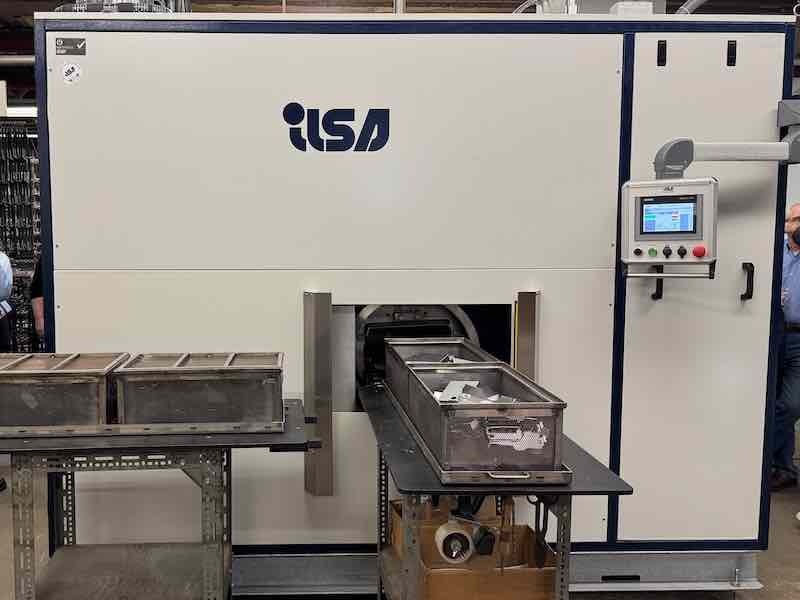
To implement this solution, the company invested in a vacuum vapor degreaser manufactured by ILSA Metal Cleaning, designed to operate with modified alcohols in a fully enclosed, automated process. The investment was moderately offset by the funding provided through a TURI grant, supported by EEA. This new system eliminates vapor losses, minimizes solvent consumption, improves productivity, and operates efficiently at lower temperatures without the need for a steam boiler.
Verification testing provided by TURI and ILSA confirmed that the modified alcohol solvent NMP chose (Dowclene 1601) achieved equivalent cleaning quality compared to the previous TCE process. The new equipment was engineered to fit within NMP’s existing degreasing floorspace, allowing the company to consolidate two legacy machines into one.
Results and Benefits
During the transition, NMP collaborated with TURI staff to document the process, baseline utility use, and projected savings in energy, waste, and operational costs. NMP’s toxics use reduction efforts led to the successful elimination of TCE at its facility, resulting in a safer work environment, reduced risks for the surrounding EJ community, energy savings, and cost savings. In addition, the first six months of operation have resulted in increased efficiency with no rejects.
Energy Efficiency and Cost Savings
Transitioning from two TCE degreasers to one completely enclosed vacuum vapor degreaser resulted in a 65% reduction in energy use. Because the new machine does not require high-pressure steam and associated cooling lines, savings on water use are also expected. In addition, the new technology does not require a carbon adsorption air emission control system. With improved operation, NMP was able to significantly reduce power consumption and save approximately $38,000 per year in electricity costs.
Table 2: NMP Capital and Annual Operating Costs
| Item | Capital Costs | AOP Previous Process | AOP New System | AOP Cost Savings |
| Process equipment | $191,000 | |||
| TURI/EEA grant | (48,000) | |||
| Initial chemical purchase | 4,930a | |||
| Chemicals | $ 2,800 | $ 2,465b | $ 335 | |
| Electricity | 53,420 | 15,265 | 38,155 | |
| Water - steam/cooling | 570 | 0 | 570 | |
| Worker training | 7,150 | 2,860 | 4,290 | |
| Personal protective equipment | 260 | 90 | 170 | |
| Waste disposal | 4,800c | 120d | 4,680 | |
| Process maintenance | 2,650 | 0 | 2,650 | |
| Machine replacement parts | 2,125 | 1,010 | 1,115 | |
| Labor | 43,680 | 38,220 | 5,460 | |
| Totals | $147,930 | $117;455 | $60;030 | $57,425 |
AOP: Annual Operating Costs
a 110 gallons for initial fill of machine.
b Additional year make-up expected to be less than 1 drum.
c 2 drums of TCE with oil @ $1676 each plus 2 drums of carbon adsorption filters @ $722 each.
d Approximately $120/drum. NMP expects to generate no more than 1 drum/year.
Overall, operation of the new machine yields annual savings of approximately $57,000. The expected payback period for this investment is, conservatively, 2.6 years. The largest savings is expected to result from reduced electricity consumption; significant additional savings will also result from lower worker training, labor, waste disposal, and process maintenance costs. Additional operational improvements are noted below.
Operational Improvements
Beyond the operating cost savings described above, other operational benefits experienced by NMP include:
- A shortened cycle time, improving throughput and allowing for 2-3 more cycles per hour.
- 32 programmable and completely automated cleaning options, compared to only three previously, increasing process flexibility and control.
- A fully enclosed system, which eliminates fugitive solvent emissions.
- The new system requires only a 60-amp circuit versus the previous 200-amp circuit.
- 80% less time spent on maintenance and repair tasks due to modern design.
- Excellent worker and customer feedback; the new equipment is much easier to use and generates noticeable improvements in quality.
- Improved overall efficiency, saving 5-6 hours a week in labor.
- Quieter technology, reducing noise pollution.
Environmental and Community Impact
The environmental benefits of this project include:
- The elimination of TCE improves worker health and local air quality.
- The reduction of hazardous waste supports safer waste management practices and fewer shipments of hazardous waste through the community.
- The project aligns with Massachusetts’s goals for toxics use reduction and sustainability leadership in manufacturing.
Conclusion
New Method Plating successfully eliminated the use of TCE at their facility, which significantly reduced worker exposure to hazardous chemicals, reduced operating costs, and improved overall efficiency. Financial and technical support from TURI helped NMP move quickly on this opportunity, realizing a simple payback of less than 3 years.
This project demonstrates that, through thoughtful planning, small manufacturers can achieve meaningful toxics use reduction and operational efficiencies while maintaining their quality standards.
The collaboration between NMP, TURI, and trusted vendors resulted in the successful implementation of a safer and effective alternative cleaning process that the company expects to use for the foreseeable future.
The Toxics Use Reduction Institute (TURI) at UMass Lowell provides the resources and tools to help Massachusetts companies and communities make the Commonwealth a safer place to live and work. Established by the state’s Toxics Use Reduction Act of 1989, TURI provides research, training, technical support, laboratory services and grant programs to reduce the use of toxic chemicals while enhancing the economic competitiveness of Massachusetts businesses. Learn more at http://www.turi.org or contact info@turi.org, 978-934-3275.